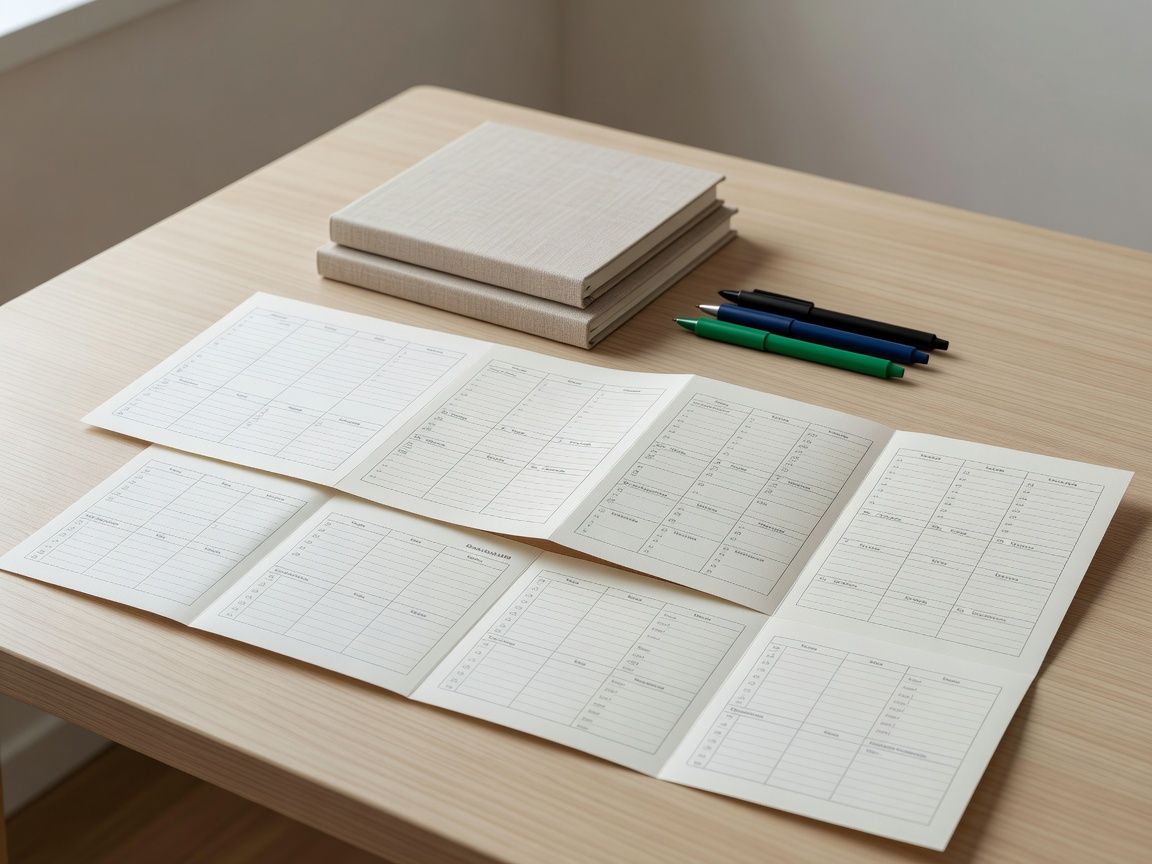
Building a Sustainable Homeschool Schedule
One of the greatest misconceptions among new homeschooling parents is that a home education must mirror a traditional eight-hour school day. In public schooling environments, considerable time is consumed by attendance, transitions between periods, classroom management, and standardized testing preparation.
In a home environment, focused academic instruction can typically be accomplished in two to four concentrated hours per day, leaving ample time for free play, deep reading, physical recreation, and family projects.
Step 1: Identifying Core vs. Loop Subjects
A proven organizational framework used by veteran home educators is the division of studies into Core Daily Subjects and Loop Subjects:
- Core Daily Subjects: Topics requiring constant daily practice and compounding mastery. These include Mathematics, Reading/Phonics, and Handwriting or Copywork.
- Loop Subjects: Enriching topics that do not require daily repetition. Rather than assigning fixed days of the week, homeschoolers cycle through a loop list (e.g., History → Science Lab → Art → Geography → Music Appreciation). Whenever time allows, you take the next subject in sequence.
Step 2: Recommended 4-Day Academic + 1-Day Nature Model
Thousands of homeschooling families rely on the 4+1 schedule model:
- Monday through Thursday: Structured academic mornings focusing on math, language arts, and one rotating loop subject. Afternoons reserved for independent reading and creative projects.
- Friday Nature & Co-op Day: Field trips, museum expeditions, homeschool co-op gatherings, nature journaling, and library visits.
Interactive Routine Checklist
Use our real-time interactive checklist to ensure your foundational homeschool rhythm remains stable throughout the week:
Weekly Readiness Checklist
Handling Burnout and "Off" Days
Flexibility is the primary benefit of home education. If a child is struggling with a concept, pause the curriculum. Shift toward educational documentaries, board games involving mathematical probability, or baking to explore practical measurement and chemical leavening.
For regulatory standards, homeschoolers in the UK and international jurisdictions may consult official guidelines via UK Government Home Education Guidelines or the Home School Legal Defense Association (HSLDA).